
 Ever wish you could photograph Washington’s landmarks like a pro? Architectural landmark photographer E. David Luria teaches thousands of shutterbugs annually through his Washington Photo Safari.
Mr. Luria’s own images of Washington DC have appeared in more than 100 local and national publications, including TIME, Prevention, and Washingtonian magazines and on 30 magazine covers, and on 80 postcards guidebooks, calendars and tourist publications. Trained in Paris by a protege of Henri Cartier Bresson, Mr. Luria is an official photographer of the National Cherry Blossom Festival, appeared twice as a photographic expert on the local NPR affiliate WAMU’s Kojo Nmandi Show and he photographs for NOW Magazine, WHERE-Washington, the U.S. Capitol Historical Society, Destination DC (the Washington, D.C. Convention and Tourism Corporation,) Washington Post’s Apartment Showcase Magazine, Washington Spaces and the Entertainment Book. He is also a photography instructor for the Smithsonian Associates, Penn Camera, and the Corcoran Gallery of Art.
You can check out Mr. Luria’s photos at edavidluriaphotography and sign up for classes at Washington Photo Safari. Meanwhile, Mr. Luria was kind enough to answer 5 Questions with Monumental Thoughts.
 Q: The toughest part of photographing outdoor monuments, statues and memorials seems to be shadows. Is there a best time of day to minimize shadows and if not what’s the top way to live with them?
Good question: the answer is to avoid shadows, unless they add to the beauty of the photograph.
The best way to do this is to time your photography with the position of the sun in the sky. For example, the Lincoln Memorial should be photographed in the early morning (about 1/2 hour after sunrise) from the southeast corner, with golden sunlight falling on the south and east elevations of the building. In the afternoon, the Lincoln Memorial is all gray and boring.
Early morning is also the best time to photograph the soldiers of the Korean War Memorial, as most of them face east. Here the long shadows of early morning sun on the soldiers’ bodies add to the beauty of the photograph. In the wintertime, when the sun is even deeper into the southern sky, it reflects off the south-facing bodies of the 19 soldiers, giving you a ghostlike army of another 19 soldiers reflected in the black wall behind them. (These 19 reflections, plus the 19 statues, make up a total of 38 soldiers, symbolizing the 38th Parallel that now divides North and South Korea.)
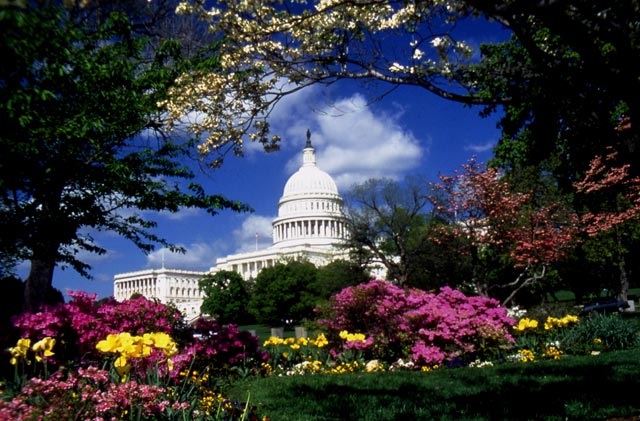
The Mall-side of the U.S. Capitol building, which faces west, should be photographed in the late afternoon sun, which turns the Capitol into gold, not white. Afternoon is also the best time to photograph the west-facing view from the Lincoln Memorial down the Reflecting Pool towards the Washington Monument.
In the daytime the White House should be photographed from the south, from the fence on E Street, because south-facing buildings get sun all day long in this, the northern hemisphere of the world. Do NOT photograph the North Portico of the White House (from Pennsylvania Avenue) in the daytime – it is always in shadow. Do it at twilight (1/2 hour after sunset) with the illuminated White House glowing against a deep blue sky.
 Q: People always stand in front of outdoor sculptures for photos. What’s one alternative angle to spice up the albums?
The answer applies to ANY photograph of people or statues of people: get in low, get in close.
For example, the best pictures of the Three Servicemen Statue near the Vietnam Memorial are taken from ground level, looking up, it makes the soldiers look taller, and they are framed by the American flag in back of them.
The same applies to the nearby Vietnam Women’s Memorial, a low angle shooting up at that nurse cradling a wounded soldier in her arms is much more impressive than a photo taken from a standing position. Kneel down, get down, get in close: that’s where the good pictures are!
Q: Do you ever work in black-and-white given so many monuments are gray?
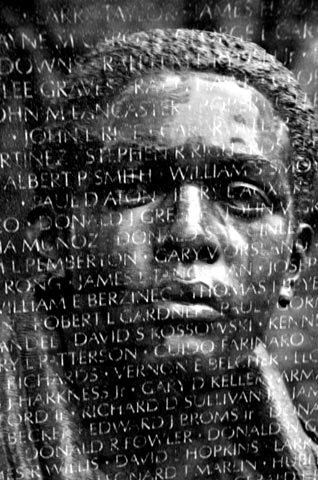
Absolutely! All the time. Black and white is MUCH better for statues since, as you say, they have no color anyhow! Black and white (especially in the rain or snow on a dark day) makes the photos MUCH more dramatic and interesting!
 Q: What’s your favorite monument, memorial or statue around town?
There are many, but the Korean War Memorial is one of my very favorites because it does such a good job of depicting what it’s like to be in combat. These 19 soldiers are all scared to death of getting shot at any moment, they are tired, grubby, smelly, hungry, freezing cold, afraid, and it shows on their faces. These guys are at the bottom of the food chain in war; they are the ones who do the shooting, and who get shot at. This makes the Korean War Memorial, in my opinion as an Army vet myself, a real tribute to their service.
Q: Washington Photo Safari has more than 100 different classes from cherry blossoms to weddings. What tends to be the more popular classes?
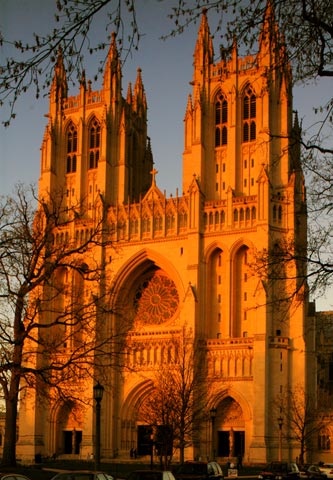
The most popular classes that always fill up far in advance are: Washington National Cathedral, Monuments and Memorials, the Franciscan Monastery, the cherry blossom treks, the METRO system, St. Matthews Cathedral, indoor and outdoor portraiture, our seminar entitled:” Wait! Don’t Quit Your Day Job: Making the Transition to Professional Photography,” and – believe it or not – F Stops and Shutter Speeds!
Discover more from Rick Snider's Washington
Subscribe to get the latest posts sent to your email.
